Running an Airbnb in Germany: A Complete Guide to Preparing Your Listing
🔗 Related reading:
👉 Running an Airbnb in Germany (Overview)
1️⃣ Introduction & Core Concept
Very often, when you start preparing a space for Airbnb, it begins completely empty — no furniture, no setup — just like a blank canvas.
As a host, you become the artist who gets to design and shape that space.
It’s a mix of excitement and uncertainty.
On one hand, you have the freedom to create any kind of experience you want for your guests.
On the other hand, you might worry whether your design will require too much time and effort to maintain in the long run.
Over time, I developed one core idea:
💡 Airbnb is not about renting out a space — it’s about designing an experience, while maintaining balance.
To provide a great guest experience while also keeping your own time, cost, and energy under control, house rules become a crucial part of the system.
2️⃣ Three Core Elements
🧩 Part 1: House Rules (Designing the System)
If you want your guests to fully enjoy your space — without creating extra workload for yourself — you must invest time in defining clear house rules.
Well-designed rules act as a filtering mechanism:
▫️ You attract guests who agree with your expectations
▫️ You naturally filter out those who are not a good fit
But there is one important principle:
❗ House rules are meant to support the experience, not to control guests
Remember, your guests are there to enjoy their trip — not to follow strict, military-style instructions.
In my case:
- I do not outsource cleaning or management
- I manage everything myself
So I set a few essential rules:
- ❌ No parties
- ❌ No pets
- 🗑️ Guests are asked to dispose of trash in a designated area upon checkout
These rules are not about restriction — they are about:
▫️ Reducing cleaning workload
▫️ Maintaining quality
▫️ Keeping review scores consistent
When your rules align with your way of operating, you naturally attract the right kind of guests.
🧩 Part 2: Space Planning & Interior Design
My listings are located near :contentReference[oaicite:0], so my typical guests include:
- Groups of friends (around 4 people)
- Families (4–6 people)
- Couples or two-person travelers
Initially, I designed one listing to accommodate up to 6 guests.
However, after running it for a while, I realized that I couldn’t sustainably manage that capacity.
So I adjusted:
- One listing: up to 4 guests
- One listing: up to 2 guests
This led to an important realization:
Designing a listing is not just about space — it’s about operational capacity
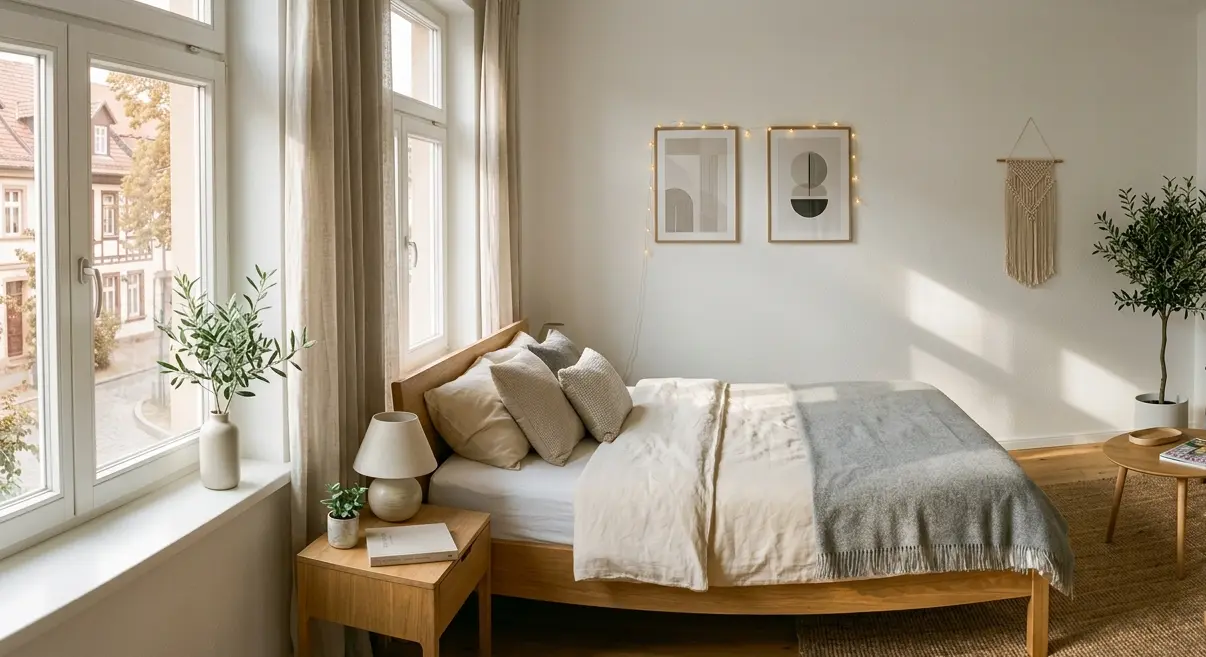
When it comes to design, my principle is simple:
💡 Simple is the best
Key design considerations:
- Keep large furniture within a consistent color palette (or at most two contrasting tones)
- Avoid over-decoration to prevent visual clutter
- Use small decorative elements as accents only
For furniture, I mainly choose:
- IKEA
- JYSK
The reason is practical:
If something gets damaged, I can quickly find a replacement.
I also use low-maintenance elements such as:
- Artificial flowers
- Simple greenery
These help create depth and atmosphere without increasing maintenance effort.
💡 Remember:
Decor is a topping — not the main dish
Too much decoration can actually reduce the overall quality of the space.
🧩 Part 3: Market Demand
No matter where you are hosting, one thing never changes:
The person using your space is your guest
The simplest approach is:
💡 Think like a guest
Ask yourself:
- If I were visiting this city, what would I need?
- What would I expect from this space?
Once you can answer these questions, you’ve already completed about 70% of the design process.
But there is something equally important:
❗ Don’t ignore your own limits
At one point, I allowed up to 6 guests — and eventually experienced burnout:
- Feeling constantly tired
- Losing motivation to respond to guests
- Starting to feel overwhelmed
This is a critical warning sign.
Because once your enthusiasm drops,
👉 the guest experience will decline — and it will show in your reviews.
So remember:
💡 Market demand matters — but your own sustainability matters more
4️⃣ Summary
Over time, I realized that preparing an Airbnb listing is about balancing three things:
Rules × Space × Market
Every listing and every host is different.
My approach may not apply to everyone,
but if this article helps you take the first step with more clarity, then it has served its purpose.
5️⃣ What’s Next
In the next article, I’ll share:
- How I take attractive listing photos (without professional photography)
- How I do market research
- How I use Airbnb pricing suggestions to set the right price
If you find this series helpful, feel free to follow along.
About the Author
Niki Li is a Taiwanese expat living in Germany, an Airbnb host with over five years of experience, and co-founder of the indie game studio Watershadow Games. For more Airbnb hosting insights and game development stories, stay tuned to this site.